Copper or aluminium DC cable for solar farm home-runs?
Aluminium-alloy DC cable can cut home-run cable cost substantially on large plants. When it makes sense, how to size it and what to watch at the terminals.
By Xinya editorial team
On a utility-scale plant, the DC home-runs from combiner boxes to inverters are the heaviest and most expensive part of the DC cabling. That is where aluminium-alloy solar cable earns its place.
Why aluminium
Aluminium has about 61% of copper's conductivity but only around 30% of its weight, and costs far less per kilogram. For the same voltage drop you need roughly 1.6 times the cross-section — and still save a large share of the cable cost and weight.
Where it fits
- Combiner box → central or string inverter, 16 mm² and above
- Long, straight runs in trenches or trays
- Large plants where hundreds of kilometres of home-run cable are installed
String cables between modules stay tinned copper (4–6 mm²): they need flexibility and fit standard PV connectors.
Sizing example
A 400 A home-run, 150 m one way, 1,500 V, 1% drop: copper needs about 185 mm²; aluminium about 300 mm². Check current rating with ambient and grouping derating as well.
Terminations
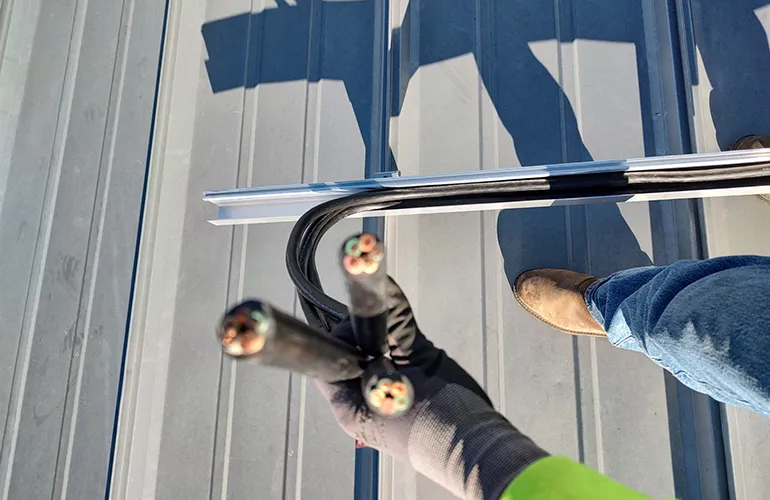
Use bimetallic or aluminium-rated lugs, clean and grease contact surfaces, and torque to the lug maker's values. Make sure the inverter and combiner terminals are approved for aluminium.
Send us your block layout and home-run lengths — we will compare copper and aluminium options on voltage drop, losses and cost.